Gold · Updated September 1, 2026
How Gold Buyers Calculate Gold Value
The exact arithmetic behind a gold offer — karat, weight, the spot price, and the buyer’s margin — with a worked example, the units that trip people up, and how to tell whether an offer is fair.
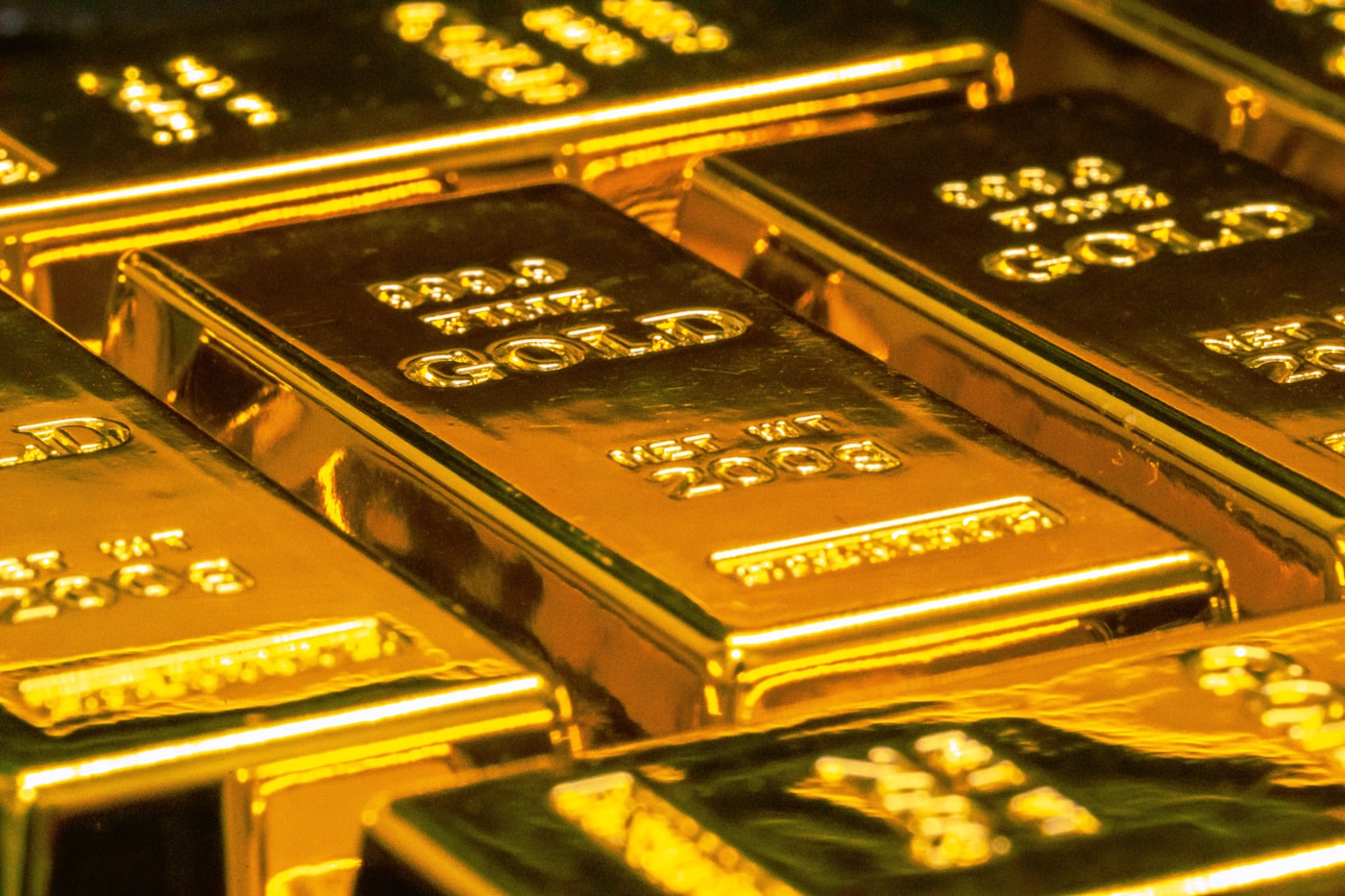
Gold is the easiest thing in the jewelry world to price, because the raw material has a public price. If a buyer will not show you the math, that tells you something.
The three inputs
1. Purity (karat). Pure gold is 24 karat. Jewelry is alloyed for strength: 18K is 75 percent gold, 14K is 58.3 percent, 10K is 41.7 percent. European and Asian pieces are often marked in thousandths — 750, 585, 417 — or made in 21K (87.5 percent) and 22K (91.7 percent). A stamp is a claim, not proof; buyers verify with an acid test or an XRF analyzer, which reads the alloy directly.
2. Weight. Measured on a calibrated scale, net of stones and non-gold parts (steel springs in clasps, for instance). Two units are in common use and confusing each other is a classic way to be underpaid: a gram (g) and a pennyweight (dwt). One pennyweight is 1.555 grams. A buyer quoting “$X per pennyweight” is not comparable to one quoting per gram until you convert.
3. The spot price. Gold trades globally, and the spot price — quoted per troy ounce, which is 31.103 grams — is public and updates through the trading day. Every honest offer is derived from it.
The formula
Pure gold content × spot price per gram = melt value Melt value − buyer’s margin = offer
Where pure gold content = weight × purity, and spot price per gram = spot per troy ounce ÷ 31.103.
A worked example
Say you bring in a 14K chain weighing 20.0 grams, and spot gold is $2,400 per troy ounce that day.
- Spot per gram: $2,400 ÷ 31.103 = $77.16
- Pure gold in the chain: 20.0 g × 0.583 = 11.66 g
- Melt value: 11.66 × $77.16 = $899.68
A buyer paying 85 percent of melt would offer about $765; at 70 percent, about $630. Refiners, who actually melt the gold, pay dealers very close to melt; the buyer’s margin covers testing, handling, and the refining fee. Reputable buyers pay a high percentage of melt on plain scrap; very low offers usually mean either a large margin or a fudged weight or karat.
Things that change the picture
- The piece is worth more intact. A signed designer chain, an antique, or a piece with fine diamonds should be priced as jewelry, not melted. Ask.
- Gold-filled and plated. A thin gold layer over base metal — marked GF, 1/20 12K, HGE, or unmarked — has almost no recoverable gold. It should be identified honestly and set aside.
- Coins and bars. Priced on metal content plus a product premium that tracks the market; not by the scrap formula.
How to check an offer
Ask for the karat of each group, the weight of each group in a unit you understand, the spot price used, and the resulting per-gram figure. Multiply it out on your phone. If the buyer will not give you those four numbers, go somewhere that will. We show all four at both our Atlanta and New York offices.