
Watches · Updated September 1, 2026
How Much Is a Rolex Worth?
How the resale value of a used Rolex is determined — reference and dial, condition, box and papers, service history, and the week’s market — with notes on which models hold value and how to get a real number.
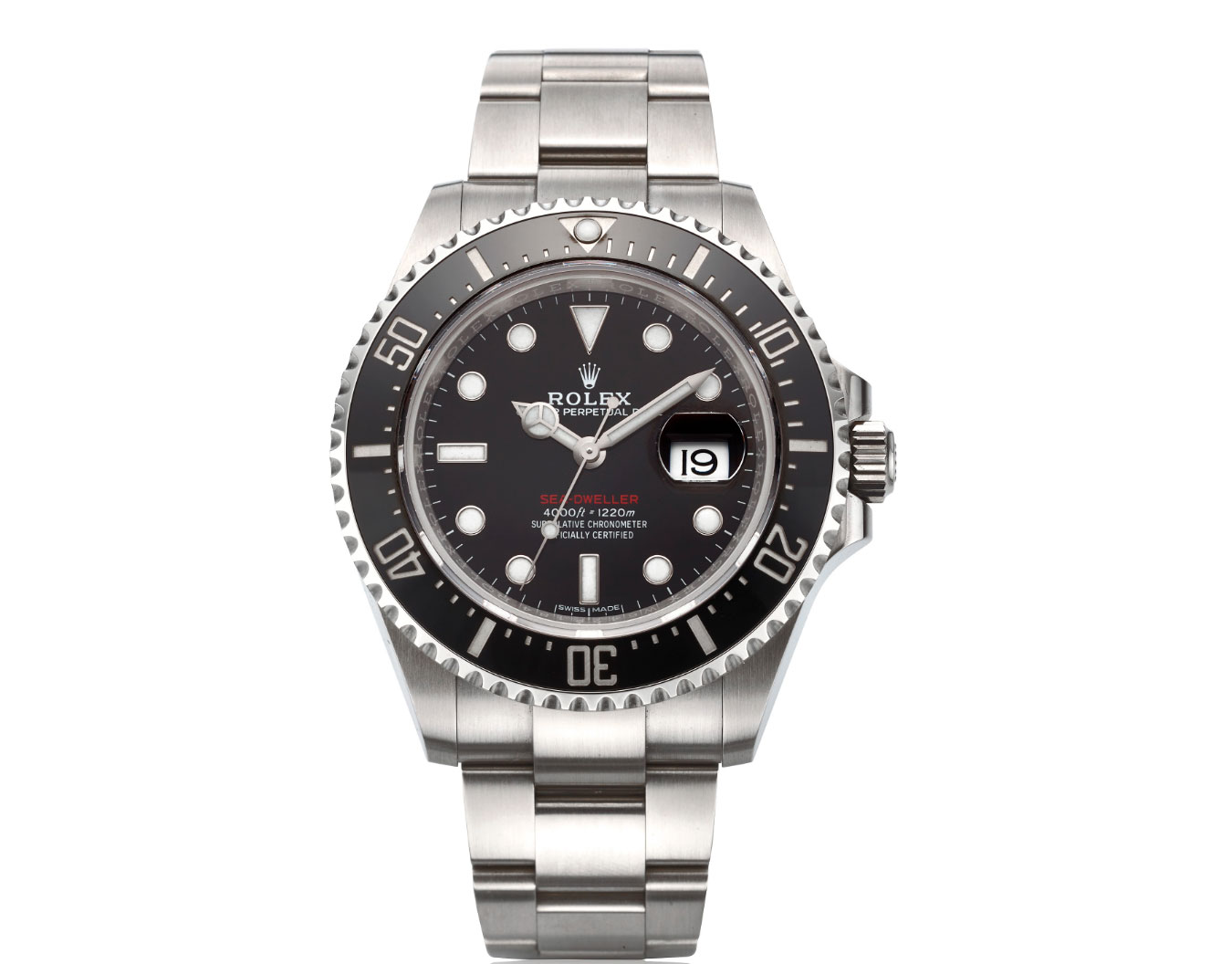
A used Rolex is worth what the secondary market is paying for that exact reference, in that condition, that week. Unlike most jewelry, that market is public: dealers and auction houses trade Rolex every day, so there is a real answer for nearly every watch. Here is how the answer is built.
1. Which Rolex, exactly
“A Submariner” is not enough. The reference number (engraved between the lugs at 12 o’clock, and on the warranty card) identifies the model, generation, metal, and bezel; the dial variant and bracelet type narrow it further. Two watches that look alike to most people — a 16610 Submariner from 2005 and a 126610LN from 2022 — trade thousands of dollars apart. Vintage references from the 1950s–80s, and certain modern variants (a “Pepsi” GMT-Master II, a steel Daytona, a Submariner with a discontinued “Hulk” dial), carry premiums driven by collectors and by scarcity at retail.
2. Condition
Buyers pay most for an unpolished case with sharp, crisp edges and bevels, an unmarked crystal, and a bracelet without stretch. Each polishing removes metal and softens the lines, and heavy polishing can cut the value meaningfully. Replaced dials, hands, bezels, or crowns — even genuine Rolex service parts — reduce the value of a vintage watch, where originality is everything; on a modern watch, they matter less but should be original. Aftermarket parts (diamond bezels, non-Rolex dials) reduce value substantially.
3. Box and papers
The “full set” — original box, warranty card or papers, booklets, hang tags, and spare links — adds to the offer, typically 10–20 percent on modern sports models and sometimes more on vintage pieces where original papers are rare. A watch with nothing but itself is still very sellable once authenticated; it just sells for less.
4. Service history
Recent service by Rolex or a reputable watchmaker, with receipts, is a plus. Do not have the watch serviced or polished specifically to sell it: the service cost rarely comes back in the offer, and the polishing will lower it.
5. The market this week
Rolex secondary prices rose sharply through 2021–22, fell back through 2023, and have moved since with supply and demand for individual references. Any buyer’s offer is derived from current dealer asking prices and recent auction results, less a margin. A quote from six months ago is not a guide.
Which models hold value best
Broadly: steel professional models (Submariner, GMT-Master II, Daytona, Explorer, Sea-Dweller) hold value best and in some cases resell above their retail price; Datejust and Oyster Perpetual models in steel are liquid and resell at a solid fraction of retail; two-tone and full-gold Datejusts and Day-Dates resell at a smaller fraction of retail, with the gold content as a floor; Cellini and dress models are the softest. Vintage watches are their own market, driven by originality and rarity.
Getting a real number
- Find the reference number and note the dial, bracelet, and whether you have box and papers.
- Send that, with clear photos, to a specialist buyer for a preliminary range, or bring the watch in.
- Have the buyer inspect and authenticate it in front of you and give you a written offer that names the comparables.
- Compare with another buyer if you like; if two authenticate the same way, their offers should be close.
We buy Rolex at our Atlanta and New York offices and explain every factor above before you decide. See the Rolex model guide for notes on individual references.